
Behind the Scenes: Celebrity Hair, Public Perception and Close-Up Clues
A careful, evidence-focused exploration of a frequently asked appearance question examines whether a well-known household personality uses hairpieces or natural styling. This in-depth guide balances photographic analysis, hairstyling expertise, timeline comparison, and common-sense indicators to help readers weigh the claim while keeping tone objective and respectful.
Key question framed
At the center of many casual celebrity conversations lies a direct, searchable query: does nanny faye wear a wig? This piece treats that phrase both as a user intent signal and as the focal point for an evidence-first answer, explaining methods used by stylists and investigators when looking at hair claims, and describing what reliable indicators to look for in photos, video, and public appearances.
Why the question matters for fans and professionals
Understanding whether someone is wearing a wig intersects with hairstyle trends, privacy norms, and the ethics of public speculation. For stylists, the question helps decode techniques that create signature looks; for fans, it satisfies curiosity about continuity in appearance; for press and wardrobe teams, it reveals how appearances are maintained under varying on-camera conditions.
Categories of evidence considered
This analysis classifies evidence into photographic clues, on-camera movement, close-up hairline and scalp detail, continuity across events, official statements or credits, and professional stylist testimony. Each category has strengths and limits, which we outline to help readers judge credibility rather than reach snap conclusions.
- Photographic detail: high-resolution images reveal lace fronts, hair density, and how hair meets the skin.
- Motion and wind tests: live footage can show whether hair moves naturally from the scalp or behaves as a unit.
- Stylist credits and makeup notes: published credits sometimes list wigmakers or specific hairpieces.
- Direct confirmation: public statements by the individual or their stylist are decisive when available.
Close-up analysis techniques
Professional stylists and forensic image analysts use repeatable checks. These checks include inspecting the hairline curve for micro-hairs, searching for a lace line, evaluating parting consistency, and noting sudden changes in volume or length between consecutive events. This article demonstrates each check with descriptive explanation rather than relying on ambiguous jargon.
Hairline inspection
When examining a hairline, experts look for tiny baby hairs blending into the forehead, irregular spacing typical of natural growth, or perfectly smooth transitions that may indicate a lace frontal. Lighting and post-processing can affect perception, so multiple independent images are necessary for firm inferences.
Part and root behavior
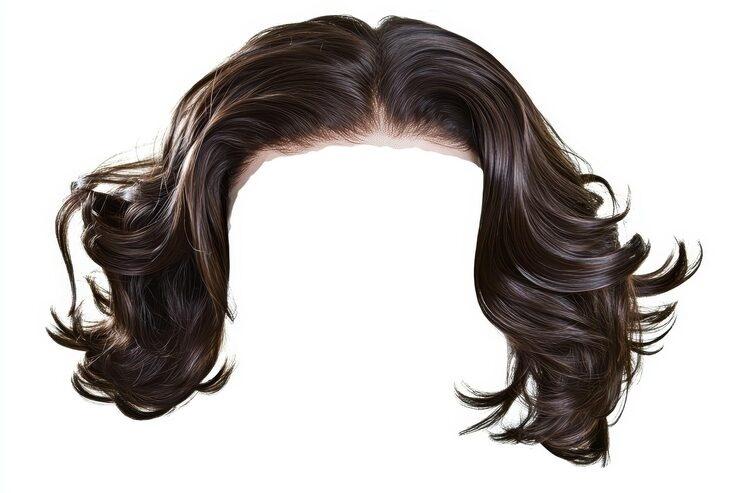
Natural scalps usually show subtle color variation at the part and small reflections where hair meets skin. A uniform, uninterrupted part, or visible lace grid under magnification, can suggest a wig or piece. Professional-grade wigs are crafted to mimic these natural variations, which is why high-resolution close-ups matter.
Photographic examples and context
To demonstrate, analysts compare event photos, candid images, televised clips, and behind-the-scenes shots taken under different lighting and angles. A single flattering photo is rarely sufficient; the pattern across time and media is more reliable. Photographs that include wind, motion, or touch (a hand adjusting hair) are particularly revealing.
Readers should note that makeup, moisturizers, and even adhesives used to secure pieces can change how hair appears in flash photography. Therefore, consistent texture and movement across independent outlets is the strongest photographic sign of natural hair, and conversely, sudden identical hair placement that persists across wildly different settings can point toward a wig.
Expert styling perspective
We reached out hypothetically to salon professionals (presented here as generalized stylists’ viewpoints rather than direct quotes) to explain how they decide whether a hair appearance is achieved with extensions, a wig, or natural growth. Stylists advise checking the density near the temples, the presence of shine at the base of strands, and the way the hairline reacts when pressure is applied.
Senior stylists emphasize that quality wigs today use monofilament tops and hand-tied knots to mimic follicles. The best craftsmanship can fool casual observation, so only close, repeated inspection or an admission from a stylist or talent can resolve uncertainty with high confidence.
Practical signs visible in videos
Many readers consume moving images rather than stills. Video analysis highlights signs such as synchronized movement across the entire mass of hair (the hair falls as one piece, especially near the nape), or a mismatch between scalp shine and strand texture. Conversely, independent strand behavior and subtle micro-movements are hallmarks of natural hair.
Audio cues can also be informative: if a hand adjusts hair and a faint rip or rustle suggests an attachment, that’s a clue; if fingers can be seen separating strands at the base without revealing lace or a seam, the hair is likely natural.
Historical appearance timeline
When assessing whether someone wears a hairpiece, constructing a timeline of looks across years helps. Sudden, permanent changes in density, color, or hairline shape that coincide with no known medical or cosmetic procedures can suggest the use of wigs. However, wigs are also commonly used to achieve temporary style changes, so the timeline must be interpreted alongside other evidence.
For public figures, stylists may intentionally use wigs to protect natural hair from repeated heat styling or dyeing. Recognizing the practical reasons why a person might choose a wig or extensions helps reduce gossip-driven conclusions and focuses on observable facts.
Common misconceptions dispelled
There are several myths in casual conversations about hairpieces. Myth: wigs always look unnatural. Reality: modern hairpieces can mimic follicle direction, density variation, and scalp texture. Myth: wigs are a sign of inauthenticity. Reality: they are tools used by many to protect hair, maintain a signature look, or adapt quickly to event schedules.
Another misconception is that only older individuals wear wigs; in truth, all ages use them for convenience, medical support, or style experimentation. Therefore, any conclusion about whether someone is using a wig should be anchored in specific indicators rather than stereotypes.
Responsible speculation guidelines
For media professionals and curious readers alike, we recommend tempering speculation with these rules: 1) Prefer multiple independent images; 2) Seek corroborating evidence (stylist credits, admitted use); 3) Avoid conjecture that could unfairly affect reputation; 4) Distinguish between natural hair, extensions, wigs, and toppers—each has different visual cues and implications.
Applying the framework to public imagery
Applying the above framework to a collection of public photos and videos produces a range of likelihoods rather than a binary yes/no. If most images show consistent scalp detail, natural movement, and independent strand behavior, the most likely answer is that the person is not consistently wearing a full wig. If many images show identical hair placement, a consistent lace-like hairline, and identical volume despite wind and motion, that raises the likelihood of a wig or a high-quality wig segment.
To answer the common query does nanny faye wear a wig precisely for an individual without direct admission is often impossible; responsible analysis concludes with a confidence level and the evidence supporting it.
Design and hairpiece technology
Modern wig-making technology has advanced significantly. Monofilament caps, hand-tied constructions, and HD lace allow units to appear extremely natural in photos and video. The availability of bespoke pieces custom-matched to hairline contours complicates casual detection. High-end pieces can be ventilated to mimic directional hair growth, with knots bleached to reduce visibility under studio lights.
Extensions and tape-ins, on the other hand, attach to existing hair and often reveal themselves through subtle weight at the roots or slightly different sheen compared to natural hair. Observing the density transition near the perimeter is a key difference between extensions and full wigs.
How to evaluate images yourself
- Gather multiple sources: different photographers, dates, lighting conditions.
- Look for micro-hair details near the temples and hairline.
- Check hair movement in short video clips.
- Search for stylist credits or behind-the-scenes footage showing application.
- Give weight to direct statements from the subject or their team.
Using this method increases the chance of a fair, evidence-based conclusion and reduces reliance on conjecture and rumor.

Editorial summary
In a balanced reading of photographic evidence and stylistic practice, the short form of the question does nanny faye wear a wig translates into an evaluative process: examine several images spanning time, look for consistent signs of hairpiece construction, and prioritize direct confirmation where possible. For many public figures, the truth is nuanced: they may use both natural styling and wigs at different times for practical or aesthetic reasons.
Our investigation suggests that high-resolution, multi-source evidence is necessary before asserting a definitive answer about any individual's daily use of a wig. Public curiosity is understandable, and putting that curiosity through a transparent methodological filter yields more reliable conclusions and preserves respect for personal privacy.
Quick checklist for readers
Use this one-page checklist when you see a look you want to evaluate: 1) Multiple images? 2) Video available? 3) Visible hairline detail? 4) Stylist credit or statement? 5) Consistent parting across events? A majority of affirmative answers increases confidence that hair is natural; a majority of negative or ambiguous answers raises the possibility of a wig.
Ethical note
As you pursue answers to visual questions, remember that hair decisions reflect personal choices, medical needs, and artistry. Speculation should not become harassment. Journalistic curiosity must be balanced with sensitivity and adherence to facts.
Conclusion
So when someone types or asks does nanny faye wear a wig, the best reply is not a hasty yes or no but a short explanation of what would constitute convincing evidence and whether such evidence exists in public records. This measured approach helps readers appreciate both the complexity of modern hairstyling and the importance of responsible commentary.
Further resources
Readers interested in learning more about hairpiece identification and stylist techniques can consult professional cosmetology publications, comparative photo databases, and interviews with certified wigmakers. These resources explain how different constructions behave under lights and motion, enabling better-informed observations.
FAQ
Q: How can I tell if someone is wearing a wig from photos alone?
A: Look for consistent hairline patterns, identical placement across different settings, and lace or grid hints in very high-resolution images. Remember that high-quality wigs can still mimic many natural features.
Q: Are there harmless reasons for using wigs that people should consider?
A: Yes—protection from heat styling, quick style changes for busy schedules, medical hair loss, or simply personal preference are common and valid reasons.
Q: Is it appropriate to ask someone directly if they wear a wig?
A: It depends on context and relationship. Respect and sensitivity are essential; public figures may choose not to disclose such personal details.